







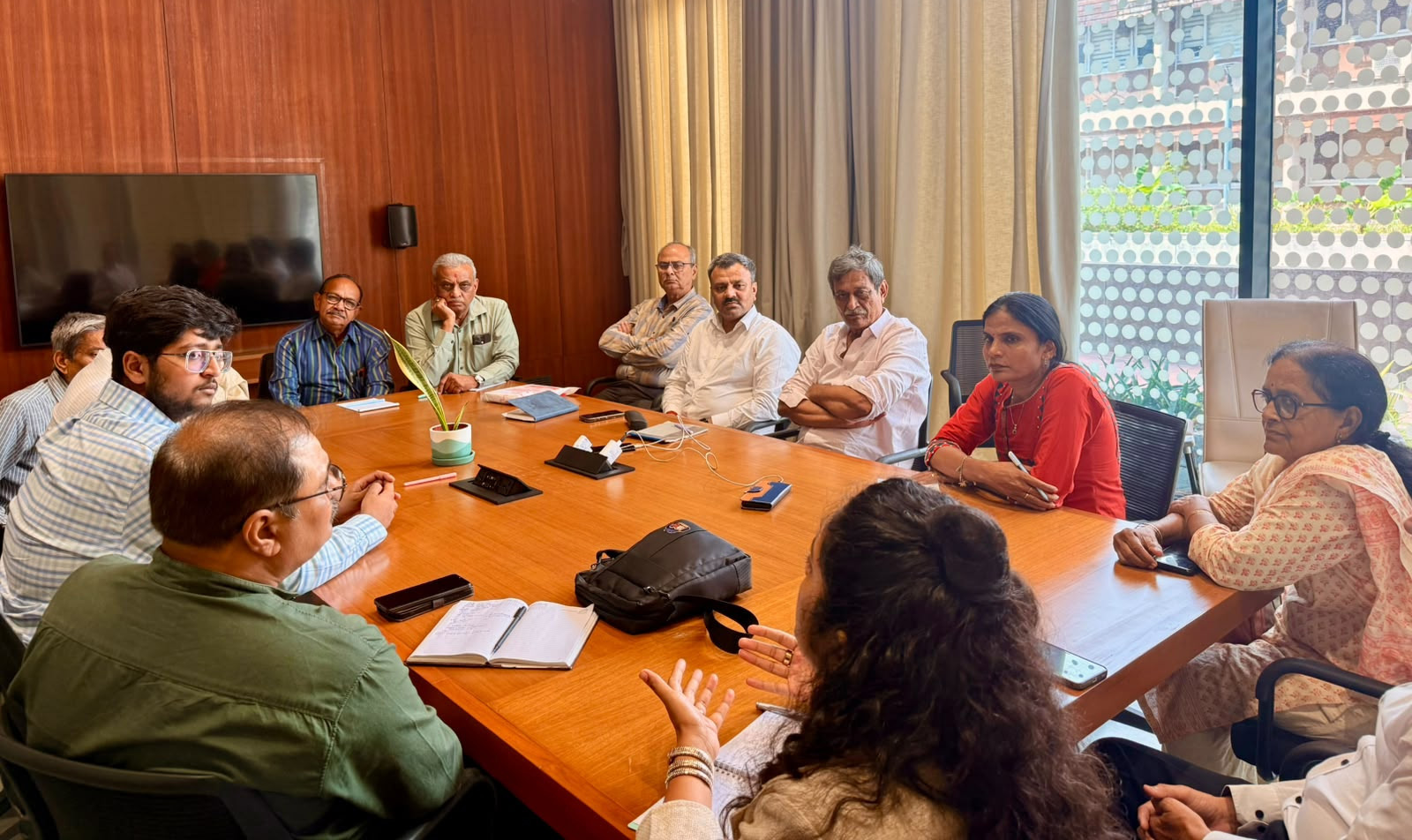
Sahakar Bharati’s Gujarat chapter has taken a fresh step towards connecting the cooperative credit sector with India’s expanding startup and technology ecosystem, organising a special training and interaction programme for representatives of cooperative credit societies at iHub, Ahmedabad.
The programme focused on technology adoption, innovation, professional management and the possibilities of collaboration between cooperative institutions and startups.
Representatives from credit societies across Gujarat discussed how the grassroots strength and community connect of cooperatives could be combined with the technology, innovation and entrepreneurial approach of startups.
The interaction comes at a time when digital transformation, automation, fintech partnerships and stronger professional management are becoming increasingly important for cooperative financial institutions. Such themes are also featuring prominently in contemporary discussions around the future of cooperative credit societies.
The participants explored ways in which startups could provide technology-based solutions to improve operational efficiency, modernise services and address emerging requirements of cooperative institutions.
The discussions also examined how the cooperative sector, with its extensive grassroots network and established member base, could offer startups opportunities to test and expand solutions relevant to local communities.
iHub CEO Hiren Mahanta and experts from different fields interacted with the participants. Sahakar Bharati Gujarat Pradesh Minister Jalpa Jain stressed the complementary strengths of the two ecosystems, pointing to the trust and grassroots connectivity of cooperatives alongside the technology and fresh ideas brought by startups.
Pradesh In-charge Jivanbhai Gole and National Executive Member Hareshbhai Borisagar were also present.
The concluding session was attended by NCUI Director Nakul Kandu and ICA Youth President Harsh Sanghani, adding a wider cooperative-sector dimension to the programme. The interaction centred on the theme of “Sahakar Se Navachar” and the need to build stronger institutional links between cooperatives and innovators.
Sahakar Bharati has long been associated with strengthening cooperative institutions and has also highlighted the importance of innovation and technology in the credit cooperative sector. Its recent programmes have included capacity-building initiatives for credit cooperative representatives, reflecting the sector’s growing emphasis on professionalisation and modernisation.
The Ahmedabad programme therefore sought to move beyond conventional training by creating a platform where cooperative institutions and emerging entrepreneurs could understand each other’s capabilities and explore practical areas of collaboration.