Today:

Tag Archive | "urban cooperative bank"

RBI cancels Arjun Urban Co-op bank’s licence

Tags: , , , ,

RBI cancels Arjun Urban Co-op bank’s licence

Posted on 24 May 2013 by Dipak Kumar

Solapur based Ajrun Urban Cooperative Bank’s licence was cancelled by the apex bank RBI on Thursday.

RBI’s press release reads “It is hereby notified for the information of the public that the Reserve Bank of India has cancelled vide order dated May 21, 2013, the licence of Arjun Urban Co-Operative Bank Ltd. Dist. Solapur, Maharashtra.

Arjun Urban Cooperative Bank is further asked to stop to carrying on banking business under Section 22 of the Banking Regulation Act, 1949 (As applicable to Co-operative Societies) read with Section 56 of Banking Regulation Act, 1949.

RBI release further adds that “the bank is precluded from transacting the business of ‘banking’ as defined in Section 5(b) of the Banking Regulation Act, 1949 (As applicable to Co-operative Societies) including acceptance/repayment of deposits, forthwith.

Comments (0)

Malegam Report to be implemented soon: RBI

Tags: , , , ,

Malegam Report to be implemented soon: RBI

Posted on 14 September 2012 by Parasnath Chaudhary

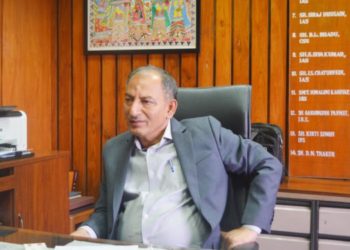
Participating in a Punjab and Maharashtra cooperative bank event in Bombay H R Khan Deputy Governor of the RBI said the apex bank would soon implement the suggestions made by the Malegam Committee on the cooperative banks.

The committee, among other things, has recommended a dual approach of having a board of directors   appoint a board of management to run the cooperative banks and a relaxation of entry norms for the cooperative banks in the areas not yet covered by banking services, the RBI deputy added.

Mr Khan urged the cooperative banks to put in their utmost efforts to expand their business as their growth thus far leaves a lot to be desired. The share of the cooperative banks in banking business has gone down from six percent to a mere two percent, he noted.

However, the RBI deputy governor lauded the cooperative banking sector for improving its assets   quality and accomplishing mergers of weaker links with stronger ones in its chain.

Main recommendations of Malegam Report

UCBs play a useful role and there is need for a greater presence of UCBs in unbanked districts and in centers having population less than 5 lakh. It is necessary to encourage new entrants to open banks and branches in States and Districts which are unbanked or inadequately banked. It is equally necessary to discourage new entrants from opening branches in Districts and population centers which are already adequately banked.

The existing well managed co-operative credit societies meeting certain financial criteria like profits, capital adequacy, NPAs’ proportion etc. should be given priority for granting licenses as urban co-operative banks particularly in unbanked or inadequately banked centers.

Organization Structure of New UCBs

There should be segregation of the ownership of the UCB as a co-operative society from its functioning as a bank. The new organization structure shall consist of a Board of Management in addition to the Board of Directors.

The Board of Directors (BoD) would be elected in accordance with the provisions of the respective Co-operative Societies Acts and would be regulated and controlled by the RCS / CRCS.

The (BoD) will establish a Board of Management (BoM), consisting of persons with professional skills, which shall be entrusted with the responsibility for the control and direction of the affairs of the Bank assisted by a CEO who shall have the responsibility for the management of the Bank.

RBI would have unfettered powers to control and regulate the functioning of the UCB and of its BoM and of the CEO in exactly the same way as it controls and regulates the functioning of the Board of Directors and the Chief Executive in the case of a commercial bank.

It should be made a condition of the license that every new UCB should be required to have a Board of Management (BoM) to be appointed by the Board of Directors (BoD) and a Chief Executive Officer (CEO) to be appointed by the BoM. While the BoD will be responsible for laying down the broad contours of strategy, the BoM will be vested with the mandate to direct and control the day-to-day operations of the UCB within the limits set by the BoD. At least 51 per cent of the members of the BoM should have special knowledge or practical experience in the matters specified in Section 10 A(2) of the B. R. Act, 1949.

Members of the BoD can be members of the BOM provided they fulfill the conditions specified. Members of the BoM can be paid such sitting fees as the BOD may decide subject to a ceiling to be specified by RBI. The BoM to follow a Code of Corporate Governance to be specified by RBI.

The CEO shall be responsible for the management of the whole or substantially the whole of the affairs of the UCB but shall be subject to the control and direction of the BoM. The appointment of the CEO shall be subject to the prior approval of RBI.

Audit by a Chartered Accountant to be appointed by the BoM from out of a panel of approved auditors maintained by RBI and subject to rotation after four years.

Umbrella Organization

There should be two separate Umbrella Organizations viz. a national level organization which provides payments and settlement services and other services normally provided by central banks as also liquidity support to its members; and one or more organizations which provide the management, IT, training and other services which the UCB sector needs.

The national level UO should preferably be in the form of a multi-state UCB with membership being restricted to and mandatory for all UCBs other than scheduled UCBs.

Member UCBs should be required to maintain their CRR in the form of deposits with the UO.

The UO should invest its funds only in the form of balances with RBI, deposits with commercial banks or in SLR securities and in no other form.

The UO should offer Repos and Reverse Repos facilities to UCBs in the same manner as RBI offers to commercial banks and at the same rates of interest.  In turn, it should enjoy Repos and Reverse Repos facilities with RBI.

UCBs can avail of Repos facilities only to the extent of their excess SLR holdings.

Until the Payments and Settlements facilities are provided directly to UCBs, the UO will act as a gateway to provide these services for a fee to UCBs. In turn, the UO will be a member of the Payments and Settlement System.

Being a UCB, the UO would have a Board of Management and will be subject to the regulation, supervision and inspection of RBI.


Comments (3)

Time to repay father-figure Kurien: Dr Abhyankar

Tags: , , , , , ,

Time to repay father-figure Kurien: Dr Abhyankar

Posted on 14 September 2012 by Manoj Kushwah

Since the last few weeks I have been in the USA. While sitting with a group of NRI friends well settled here, we heard the sad news about the sudden demise of Dr Verghese Kurien on 9th September. Those who knew him and those not knowing much about him but knowing “Amul” very well, all of them were shocked.

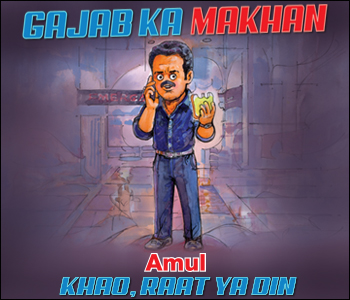
I narrated how not only thousands of milk producing female farmers  of Gujarat, but also each and every co-cooperator in India must have  felt as well as  the  iconic “Amul Girl” wept  on losing her father.

The big void created by the passing away of the “Milkman of India” will have to be filled, though only partly, through our rededication towards adopting all those principles preached and practiced by Dr Kurien.

His book “I Too Had A Dream” and also a collection of his speeches “An Unfinished Dream” need to be read once again to imbibe his principles.

Creating our Brand Equity, rendering Quality Service, giving Value for Money to all our stake-holders, Financial Self Reliance and not the least, a firm Commitment to Co-operative Principles would be our real tribute to Dr Kurien.

Neglect of the Co-operative model of enterprise vis-a-vis Private and Public model by our planners right from the post-independence days is the basic woe of the co-operative sector of India.

But we, the co-operative workers are also equally responsible for the plight and deterioration of our sector.

Our movement must be totally free from political influences. It should not be seen and used as a ladder to political positions either.

On behalf of the oldest urban co-operative bank of our country, the Cosmos Bank, running in its 106th year, I offer heartfelt condolences to the bereaved family of Dr Kurien.

May God give us all a strong will and courage to fearlessly follow Dr Kurien’s philosophy in our respective co-operative activities.

- Dr M L Abhyankar

Chairman Emeritus, Cosmos Co-op Bank

(The writer is a leading cooperator of India and a member of Malegam Committee)

Comments (0)

Kurian: A karmayogi with empowerment of people as religion

Tags: , , , , ,

Kurian: A karmayogi with empowerment of people as religion

Posted on 12 September 2012 by Ajay Jha

BY H.K.Patil

Dr Kurian, in my opinion would rank among the top Indians in the post -independence India, whose contribution to the betterment of lives of our countrymen, particularly the farmers, has been immense.

His efforts have resulted in transforming India from a milk deficient and milk starved nation to become the largest producer of milk in the world. His famous expression is “I am in the business of empowerment. Milk is just a tool in that”.

Dr Kurian’s story of entry into milk and cooperative sector and his Anand saga is very well documented. His journey from being a young technology man having reluctantly come to the interiors of Gujarat to become a messiah of millions of villagers is truly inspiring.

I am personally amazed and impressed by the fact that how a combination of true co-operator and an open minded technocrat having a common desire to empower people can achieve the unbelievable.

For Shri Tribhovandas Kishibhai Patel, a cooperative leader and a true Gandhian with a strong desire to improve lives of villagers in Gujarat through cooperatives and for Dr.Kurian, then a young technocrat finding himself to be in a nondescript place called Anand, coming together has been a game changer, not only for themselves, but for the State and the Country.

It would be our fortune if we get many more such combinations of cooperative leaders and technocrats who can take on the might of multi nationals and corporate, in coming years when India is expected to grow into an economic powerhouse.

Anand model of Dr Kurian is the best alternative to corporate and for ensuring equitable distribution of fruits of growth.

While he empowered millions of his countrymen through cooperatives, the fact that Dr.Kurian chose milk as the vehicle of empowerment ensured that majority of those empowered were women.

“White Revolution” by the most famous “Milkman” known in history is a story that will make every Indian proud.

Dr Kurian’s discomfort with corridors of power and bureaucracy is well known. Late Shri Lal Bahadur Shastri as PM, impressed with Amul Model, wanted Dr Kurian to create an institution that would replicate the model in other parts of the Country. This was the genesis of National Dairy Development Board (NDDB).

While accepting the responsibility of setting up the institution, Dr.Kurian put a condition that the Board be headquartered in Anand, away from the bureaucratic interference of Delhi, to which Shastriji readily agreed.

NDDB played a very important role in creating awareness about the Amul model and inspired them to replicate it in other states. In later years he handed over reins of the Board to his protégé Ms .Amrita Patel, who has chartered a course for NDDB in a style which has been different from Dr.Kurian’s, but nevertheless successful.

Dr Kurian was also instrumental in creating another fine organisation, IRMA (Institute of Rural Management),that has developed over the years into one of the respected management institutes in the country.

It was an unequal battle in 1949 when the milk cooperatives in Anand decided to take on the then market leader in dairy products, called POLSONS which was known to be exploiting farmers, by creating a new brand image AMUL. They succeeded hugely and wiped out the corporate which was a household name.

Dr. Kurian also ensured that the biggest beneficiary out of the business of milk and milk products was the farmer who sold the milk to his local cooperative. Although today a large number of private players have entered the dairy sector, but nevertheless the system of pricing that benefits the farmers that has been benchmarked by Amul and NDDB is being followed by all.

Dr.Kurian will be remembered by posterity as a person who not only believed in empowerment as instrument for growth and well-being of masses, but he also emphatically proved its efficacy by his deeds. The structures and systems he has created stand testimony of his dedication and his conviction.

May the Soul of this tireless crusader for empowerment rest in peace and let us all the co-operators rededicate ourselves to the cause of economic empowerment of the less privileged brothers and sisters through cooperatives.

Comments (0)

Shamrao Vithal Cooperative Bank in trouble

Tags: , , , ,

Shamrao Vithal Cooperative Bank in trouble

Posted on 03 September 2012 by Parasnath Chaudhary

Shamrao Vithal Cooperative Bank in Bombay is in trouble. It is one among the five top urban cooperative banks of the country.

Gold ornaments worth Rs 86 lakh have disappeared from its locker. There are allegations that the locker in-charge himself has stolen the gold ornaments.

Police investigations have confirmed that P.V. Nalawade the locker custodian took away the ornaments by using duplicate keys and sold them on the market.

Mr Nawade is already in police custody and police is close to catching those who have been complicit in the crime.

Police has called upon banks to have experienced and ranking officers as the locker custodians so that such incidents do not recur.

People associated with cooperatives say such incidents in a hitherto reliable bank like Shamrao Vithal leads to flight of trust from urban cooperative banks .

Comments (1)

Premier Automobiles’ Employees Co-operative Bank to be liquidated

Tags: , , , , , ,

Premier Automobiles’ Employees Co-operative Bank to be liquidated

Posted on 05 August 2012 by Ajay Jha

The Registrar of Co-operative Societies, Maharashtra has also been requested to issue an order by RBI for winding up the Premier Automobiles’ Employees Co-operative Bank and appoint a liquidator for the bank.

RBI had earlier advised the bank to explore the possibility of merger with another bank. However, the bank did not take any action in this regard.

The RBI inspection revealed various deficiencies and irregularities in the working of Bank and it restricted it from opening ATMs/ extension counters/ branches and extending the area of operation, declaration of dividend without permission of the Bank and acquiring or shifting its office premises.

RBI also found out that the bank had given loans to several persons who were not employees of Premier Automobiles Ltd.

It also noted that the performance of the committees of the Board was not satisfactory. The bank had violated RBI guidelines on induction of professional directors on the Board of the bank.

The deterioration in bank’s financial position showed the inability of the management to bring about any major improvement and arrest the deteriorating financial position of the bank. The performance of the Board of the bank was not satisfactory as it could not take initiative in framing risk management policies of the bank.

Comments (0)

Kangra Cooperative Bank posts impressive growth

Tags: , , , , , ,

Kangra Cooperative Bank posts impressive growth

Posted on 31 July 2012 by Manoj Kushwah

The Kangra Co-operative Bank is the largest co-operative Bank of Delhi. It has reported net profit of Rs.12 crore for 2011-12, registering 66 % growth over previous fiscal.

The Bank has not only been able to retain its existing customers but has also added new customers. It has registered a net growth of more than 4.75% in its customer base.

Talking to Indian Cooperative, Attar Chand Parmar, MD  of the Bank said that during last year there had been a great demand of loans from the customers but the Bank had to turn down plenty of requests to maintain  the mandatory CD ratio of 70%.

In order to meet the loan requirements of the customers while also maintaining the maximum allowed CD ratio of 70%, special efforts are being made to mobilize more deposits. The Bank has increased borrowing rates very recently and made them very competitive.

The Bank has successfully been able to increase its deposits and loans by 16.75 % and 18.34 % respectively during the previous financial year 2011-12.

The Bank has also been able to reduce down both gross and net NPA; which has come down to 5.07% and 0% from 6.20 % and 0.32% respectively.

The CRAR of the bank has also been remained above 15% by showing marginal increase of 0.42% over previous year.

He further said that the Board of the Bank has taken a conscious decision to increase the saving bank interest rate to 5 % for amount up to  Rs.1 lac  and  6% for  amount above one lac which will help the Bank to increase CASA deposits .

The Bank has been paying 18 % dividend continuously for the last three years and the management is likely to propose 18% dividend this year too in the ensuing AGBM for its approval which has been scheduled for September 2.

The Bank is introducing RTGS and NEFT facilities at its own within next two months.

MD further added that continues and steady growth of the Bank has been due to the sincere efforts being done by the staff. The strategic planning and useful guidance of the Board of Directors which is among others represented by Shri B R Sharma, professional Director and Ex-MD of the Bank have helped the bank.

Mr Sharma has been associated with the Kangra Bank for more than five decades and  has been instrumental in bringing the Bank to its present status from a small T&C society of yester years. Above all, the able guidance of Chairman Shri Laxmi Dass with rich experience in varied fields of life has brought us to glorious heights, Mr Parmar added.

Comments (1)

Cosmos Bank posts Rs 137 crore net profit

Tags: , , , , ,

Cosmos Bank posts Rs 137 crore net profit

Posted on 25 July 2012 by Dipak Kumar

Pune based Cosmos Cooperative Bank which was earlier reported to be on acquisition spree has posted a net profit of 137.03 crore in the financial year ending 31st March 2012, an increase of more than Rs 26 crore compared to last year.

The Chairman of the Bank Mr Shashikant Bugde said that total deposits of the Bank stood Rs 12,060 crore and advances at Rs 8,510 crore. Mr Bugde declared 15% dividend for shareholders.

He informed that the financial position of the Bank has been strengthened in this financial year. The owned funds of the Bank stands at Rs 1331 crore and Capital to Risk Assets Ratio (CRAR) is at a healthy 12.56%.

The 106th Annual General Meeting (AGM) of the Bank was organized a couple of days ago in Pune. Chairman of the Bank Mr Shashikant Bugde shared financial details on this occasion.  The Directors and Members of the Bank were present in large numbers on this occasion.

Total business in this financial year reached up to Rs 20,570 crore. Leaving overall growth trend of banking sector much behind Cosmos Bank’s deposits increased by 32%  while advances increased by 33.30%. This information was shared by the Chairman.

At present, authorized share capital of the Bank is Rs 300 crore.  AGM has approved an increased authorized share capital to Rs 1,000 crore.  It has also resolved to extend Bank’s area of operation to Uttarakhand, Punjab, Delhi, Goa, Rajasthan and West Bengal.

In the financial year 2011-12 Cosmos Bank’s share capital stood at Rs 291 crore and reserve fund reached upto Rs 1,040 crore. Bank’s total investment reached to Rs 3,989 crore, working capital to Rs 13,824 crore, net worth Rs 932 crore and C.D. ratio 70.56%.

Till 31st March 2012, the Bank is operational in six states through 110 branches and 9 extension counters (Total 119 branches) and 6 Offsite ATMs. Previous year, Cosmos Bank has successfully merged Amravati Peoples Co-op. Bank and has started its four new Branches.

Cosmos Bank has a strong financial foundation with 75,520 members and more than 17 lakh depositors. At present, total 2,461 staff are working in the Bank, a proud Chairman announced.

Comments (0)

Delhi UCB Federation slams Malegam Report

Tags: , , , , ,

Delhi UCB Federation slams Malegam Report

Posted on 24 July 2012 by Ajay Jha

Delhi Urban Cooperative Bank Federation has slammed Malegam Committee report in no uncertain words. In a communication sent to Indian Cooperative.com, Federation has raised many points demolishing the recommendations of Malegam Committee.

For want of space we would presently focus on the three tire of control suggested by the Malegam Committee and resisted by Delhi UCB Federation.

The communication which is in the form of a letter to the Reserve Bank of India, says that the essence of the cooperative character of a UCB is that there is a close identity between the owners and the customers.

The sole objective of any UCB is not profit maximization as it the case with commercial banks. While recommending the constitution of board of Management, the Committee has ignored the aforesaid most salient feature of the cooperative character.

In fact, on constitution of a Board of Management, it shall create a super structure leading to great divide between the Board of Directors and the customers of a UCB.

The proposed recommendation of the committee for constitution of Board of Management, by the board of Directors, shall be inconsistent with the Model Bye Laws of UCBs, which were framed and recommended for adoption by the RBI and RCS, it says.

Readers may be aware that Laxmi Das of Kangra Bank is the Chairman of DUCBF while Vijay Mohan of Janata Cooperative Bank is its general secretary. Other office-bearers include Moti Lal Bansal of Citizen Coop Bank, Ajit Singh Sehra of Ramgarhia Co-op bank, Narendra Kumar Goyal of Indraprastha Sahkari Bank, Jai Bhagwan of Delhi Nagrik Sahkari Bank, Beg of Jamia Co-op bank, Arun Kr Jain of Vaish Co-op Adarsh Bank, V K Deewan of National Co-op bank, K K Mehra of Kharti co-op bank and others.

In a hard-hitting letter, the communication says that as per the cooperative character, coupled with Act and Rules, the Board of Directors is elected through elections for a specific term. Therefore, an inevitable question arises – whether or not the term of Board of Management shall also be equivalent to the term of Board of Directors.

If yes, then what will be the fate of the CEO, so appointed by the Board of Management? Further, the need of RBI’s approval as to the appointment of CEO also does not hold good. The RBI, at the most, may prescribe certain qualifications for the CEO, but prerogative for his appointment shall rest with the Board of Directors only.

It is pertinent to note here that once the newly elected Board of Directors take charge, they may do away with the existing Board of Management and appoint another one. Even otherwise, going by the recommendation made under para 5.11 (b) that “Members of Board of Directors the Board of Management will automatically get, truncated or abolished.

Accordingly, in such a situation the Board of Management would again be required to be constituted and may eventually lead to appointment of another CEO and this process may get repeated time and again leading to mismanagement, non-governance and destabilizing of the Management.

We apprehend that emergence of such a scenario will lead to conflict of interests, unnecessary litigation and eventually causing inordinate delays in taking appropriate decisions with regard to the working of the Bank.

Further, as per the recommendations, all operations of the Bank shall be managed by the Board of management. Again a question arises, since the Board of Directors are elected by the Members of the Bank, as per its Bye-Laws, how far they shall be accountable to the members, for the discrepancies committed by the Board of Management cannot be answerable to Members who elect the Board of Directors and not the Board of Management.

As per Chapter 4, the committee appears to have drawn the conclusion that the system of ‘Dual Control’ is responsible for most of the problems or ills ailing the UCBs and solution lies in segregation of the ownership and by putting in place a system of Board of Management.

As per Para 4.6(a) the RCS would continue to exercise control and regulation of the UCB as a cooperative society and RBI would control and regulate on its function as a bank.

It is a fact, well known to everyone that even in the present setup same system is being followed. The functioning of any UCB, as a bank, is regulated by the RBI only and the Board of the Directors strictly runs a bank by adhering to the guidelines of RBI issued from time to time.

Needless to mention here that being a ‘Banking entity’ the UCBs are subject to stricter controls and regular inspections by the Reserve Bank of India.

Moreover, it is mandatory to have minimum two professional directors on the Board of the Bank, then, how the proposed setup consisting of Board of Management will be different; rather, setting up an additional tier of Board of Management will result in triple control creating further confusion.

The communications run into many more pages which would be put before public scrutiny later.

Comments (0)

Imphal UCB: Legal action against baseless allegations

Tags: , , ,

Imphal UCB: Legal action against baseless allegations

Posted on 01 July 2012 by Dipak Kumar

President of the management board of the Imphal Urban Cooperative Bank has rubbished all allegations leveled by two shareholders recently.

Addressing reporters he said the two members had given vent to their personal frustration as they have not been able to get themselves elected to the board of directors of the bank. A legal action would be initiated against them for making baseless allegations.

The president made it clear that his bank has a strong financial background and it is not tainted by any   scandals or irregularities.

According to the general manager of the bank, the bank operates in a transparent manner and its transactions are regularly audited by the RBI.

Comments (1)


Cooperative Related Queries

Ask your cooperative-related
questions to Sh I C Naik
info@indiancooperative.com