Today:

Tag Archive | "pune"

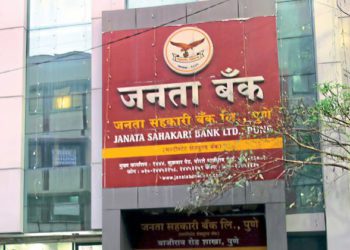
Janata Cooperative bank, Pune: Elections rigged

Tags: , , ,

Janata Cooperative bank, Pune: Elections rigged

Posted on 15 September 2012 by Manoj Kushwah

Sir,

We have sent complaints letter on 18/6/2012 against Janata cooperative bank Lt. Pune to the election office.

We have not received any reply so far.

Janata Cooperative bank’s election was held in a completely illegal manner.

Old members ensured that their monopoly on all the posts of Managing Committee continues.

The declared election result was on predictable lines. About 90 per cent of old members of Janata Cooperative Bank, Pune got re-elected by using fraudulent means.

The hand-picked election officers were hand in glove and they favoured old members.

We request you to constitute an inquiry and appoint an Arbitrator in the Janata Co-op bank of Pune.

Thanking you,

Yours

Sattish Bhosale

Pune

Comments (0)

Time to repay father-figure Kurien: Dr Abhyankar

Tags: , , , , , ,

Time to repay father-figure Kurien: Dr Abhyankar

Posted on 14 September 2012 by Manoj Kushwah

Since the last few weeks I have been in the USA. While sitting with a group of NRI friends well settled here, we heard the sad news about the sudden demise of Dr Verghese Kurien on 9th September. Those who knew him and those not knowing much about him but knowing “Amul” very well, all of them were shocked.

I narrated how not only thousands of milk producing female farmers  of Gujarat, but also each and every co-cooperator in India must have  felt as well as  the  iconic “Amul Girl” wept  on losing her father.

The big void created by the passing away of the “Milkman of India” will have to be filled, though only partly, through our rededication towards adopting all those principles preached and practiced by Dr Kurien.

His book “I Too Had A Dream” and also a collection of his speeches “An Unfinished Dream” need to be read once again to imbibe his principles.

Creating our Brand Equity, rendering Quality Service, giving Value for Money to all our stake-holders, Financial Self Reliance and not the least, a firm Commitment to Co-operative Principles would be our real tribute to Dr Kurien.

Neglect of the Co-operative model of enterprise vis-a-vis Private and Public model by our planners right from the post-independence days is the basic woe of the co-operative sector of India.

But we, the co-operative workers are also equally responsible for the plight and deterioration of our sector.

Our movement must be totally free from political influences. It should not be seen and used as a ladder to political positions either.

On behalf of the oldest urban co-operative bank of our country, the Cosmos Bank, running in its 106th year, I offer heartfelt condolences to the bereaved family of Dr Kurien.

May God give us all a strong will and courage to fearlessly follow Dr Kurien’s philosophy in our respective co-operative activities.

- Dr M L Abhyankar

Chairman Emeritus, Cosmos Co-op Bank

(The writer is a leading cooperator of India and a member of Malegam Committee)

Comments (0)

Cosmos Bank bags NAFCUB Award

Tags: , , , ,

Cosmos Bank bags NAFCUB Award

Posted on 13 September 2012 by Dipak Kumar

The fastest growing Multistate Co-operative Scheduled Bank, the Cosmos Co-operative Bank  was awarded as ‘India’s oldest Co-operative Bank’  at Annual General Meeting of ‘National Federation of Urban Co-operative Banks and Credit Societies Ltd (NAFCUB) in New Delhi.

The Vice Chairman of Cosmos Bank, Mr Krishnakumar Goyal was honored with a trophy by Mr H K Patil, the President of ‘NAFCUB’.

The Cosmos Bank with its history of 106 years of glory was specially honored at this occasion.

Cosmos Bank is the leading Co-operative Bank in Co-operative sector of India with 119 branches and extension counters in 6 states. At present Bank has a total financial set-up of more than Rs. 21,800 cr.

Comments (0)

RBI penalizes “Rupee cooperative bank,Pune”

Tags: , , , ,

RBI penalizes “Rupee cooperative bank,Pune”

Posted on 25 August 2012 by Manoj Kushwah

The Reserve Bank of India has imposed a monetary penalty of Rs five lakh on the Rupee Co-operative Bank based in Pune.

The Urban Cooperative Bank was found violating the guidelines of the Reserve Bank of India.

Rupee cooperative bank granted term loans to some borrowers much in excess of the limit of Rs ten lakh. The bank was also guilty of sanctioning fresh Cash Credit limit to the existing borrowers in excess of Rs ten lakh in 4 cases, in violation of the operational instructions.

The Reserve Bank of India had issued a Show Cause Notice to the bank in response to which the bank submitted a written reply.

After considering the facts of the case, the bank’s reply and also personal submissions in the matter, RBI came to the conclusion that the violation was substantiated and warranted imposition of penalty.

Comments (1)

Cosmos Bank posts Rs 137 crore net profit

Tags: , , , , ,

Cosmos Bank posts Rs 137 crore net profit

Posted on 25 July 2012 by Dipak Kumar

Pune based Cosmos Cooperative Bank which was earlier reported to be on acquisition spree has posted a net profit of 137.03 crore in the financial year ending 31st March 2012, an increase of more than Rs 26 crore compared to last year.

The Chairman of the Bank Mr Shashikant Bugde said that total deposits of the Bank stood Rs 12,060 crore and advances at Rs 8,510 crore. Mr Bugde declared 15% dividend for shareholders.

He informed that the financial position of the Bank has been strengthened in this financial year. The owned funds of the Bank stands at Rs 1331 crore and Capital to Risk Assets Ratio (CRAR) is at a healthy 12.56%.

The 106th Annual General Meeting (AGM) of the Bank was organized a couple of days ago in Pune. Chairman of the Bank Mr Shashikant Bugde shared financial details on this occasion.  The Directors and Members of the Bank were present in large numbers on this occasion.

Total business in this financial year reached up to Rs 20,570 crore. Leaving overall growth trend of banking sector much behind Cosmos Bank’s deposits increased by 32%  while advances increased by 33.30%. This information was shared by the Chairman.

At present, authorized share capital of the Bank is Rs 300 crore.  AGM has approved an increased authorized share capital to Rs 1,000 crore.  It has also resolved to extend Bank’s area of operation to Uttarakhand, Punjab, Delhi, Goa, Rajasthan and West Bengal.

In the financial year 2011-12 Cosmos Bank’s share capital stood at Rs 291 crore and reserve fund reached upto Rs 1,040 crore. Bank’s total investment reached to Rs 3,989 crore, working capital to Rs 13,824 crore, net worth Rs 932 crore and C.D. ratio 70.56%.

Till 31st March 2012, the Bank is operational in six states through 110 branches and 9 extension counters (Total 119 branches) and 6 Offsite ATMs. Previous year, Cosmos Bank has successfully merged Amravati Peoples Co-op. Bank and has started its four new Branches.

Cosmos Bank has a strong financial foundation with 75,520 members and more than 17 lakh depositors. At present, total 2,461 staff are working in the Bank, a proud Chairman announced.

Comments (0)

Cosmos Bank plans 5000 Bachat Gats

Tags: , , , , , ,

Cosmos Bank plans 5000 Bachat Gats

Posted on 01 May 2012 by Dipak Kumar


Speaking at the inauguration Ceremony of Financial Inclusion & Women’s Empowerment Initiative organized by the Cosmos Co-operative Bank in Pune ,Mr  Anand Sinha, Deputy Governor, RBI said that the apex Bank has always given importance to this theme.

Deputy Governor and Senior Officials of the Reserve Bank have personally gone to various parts of the country to encourage this initiative. Currently, Financial Inclusion is being used on a large scale to take the banking facilities to people from remote rural areas of the country,Mr Sinha added.

The programme was attended by many dignitaries including Sudhir Thakare, Chief Secretary, Rural Department, Government of Maharashtra, Shashikant Bugde, Chairman, Cosmos Bank, Krishnakumar Goyal, Vice Chairman, Senior Director Dr. Mukund Abhyankar, Director Govind Kshirsagar, Dr. Smita Jog, Managing Director Dilip Dehadraya, members of the Board of Directors, Chief General Manager (Operations) Himani Gokhale, Chief General Manager (Credit) Suhas Gokhale and Surekha Mane, Chief, Unique Education Foundation. More than 1000 women from 100 Bachat Gats were present.

Financial Inclusion & Women’s Empowerment and Mahila Bachat Gat have played a key role in the nation’s economic growth. It is exemplary that the Cosmos Bank has taken this initiative to more than 1000 women through 100 Bachat Gats, applauded Shri Sinha.

Shri Sudhir Thakare reviewed the progress of the Bachat Gats in Maharashtra. He added that the government will take efforts to execute various Bachat Gat schemes of the Maharashtra Government through Cosmos Bank.

Chairman of the Cosmos Bank Shashikant Bugde said that Cosmos Bank will established 5000 Bachat Gats in near future.

Dr. Mukund Abhyankar gave information about the Financial Inclusion Scheme. Director Govind Kshirsagar paid the vote of thanks.

Comments (0)

Cosmos Bank receives National Award

Tags: , , , , ,

Cosmos Bank receives National Award

Posted on 26 April 2012 by Dipak Kumar

The Cosmos Cooperative Bank, the second largest cooperative bank after Mumbai headquartered Saraswat bank bagged national award in NFS operational excellence recently.

It received the award from National Payment Corporation of India (NPCI) in NFS operational excellence.

National Payment Corporation of India is founded by Reserve Bank of India to act as an umbrella institution for all the retail payment systems in the country.

Cosmos Bank received this national award as the Best Bank in Co-Operative Bank’s category.

Various parameters employed by RBI for selecting the best bank included ATM network uptime, zero fraudulent activities on ATM network, best dispute management and many other technical parameters.

Comments (0)

Financial Inclusion in Urban Cooperative Banks

Tags: , , , , , , ,

Financial Inclusion in Urban Cooperative Banks

Posted on 14 February 2012 by Dipak Kumar

Mr Anand Sinha, Deputy Governor, Reserve Bank of India spoke on the occasion of the launch of the Financial Inclusion program of Cosmos Bank at Pune recently.

Since the speech encompassed many areas of Urban Cooperative Banks operation we produce below the text of speech for readers’ benefit


Shri Shashikant Bugde, Chairman, Shri Krishnakumar Goyal, Vice-Chairman,  Dr. Mukund Abhyankar and other Directors of the Cosmos Bank, Shri Sudhir Thakre, Secretary, Rural Development, Govt. of Maharashtra, all the aspiring women entrepreneurs present here this evening and ladies and gentlemen. I am delighted to be here this evening amongst all of you on the occasion of the launch of the Cosmos Bank’s Financial Inclusion Programme.  I would like to thank the Cosmos Bank for inviting and giving me an opportunity to be a part of this initiative which seeks to address one of the most pressing issues of our times.

2.  Cosmos Bank is one of the oldest banks in the country and has recently completed 105 years of service. While nurturing the traditional values it has inherited, of serving the small customer, the bank has also moved with times and has prepared itself for the future, by adopting new technologies and advanced banking tools to add value to its services.

3.  Today’s initiative by the bank in launching this ambitious program of financial inclusion is very commendable. Huge participation by women entrepreneurs in today’s program bodes well for the financial inclusion initiatives being undertaken by the bank. Like charity, virtues like thrift and discipline begin at home and what could be a better way than involving women in this ambitious program aimed at inculcating thrift and including, into the financial fold, the hitherto excluded.  I am happy to note that the bank is not only helping women  by opening accounts and granting loans but has also undertaken the task of imparting training, educating them in preparing their own accounts, helping them sell their produce, etc.  I am sure this initiative by the Cosmos Bank would be a great success and would turn a new leaf in the financial inclusion program.

4. Today’s conference offers me a wide canvas to speak on. Both Urban Cooperative Banks and the Financial Inclusion are two interesting topics in themselves.  Combination of the two is, by extension, a more interesting topic.  In my speech today, I would touch upon the issues related to financial inclusion program and the role of cooperatives in taking forward the objectives of financial inclusion.

Cooperative Banking

5.  The cooperative movement involves autonomous association of persons united voluntarily to meet their common economic, social and cultural needs through a jointly owned and democratically controlled enterprise. Cooperatives, as business enterprises, are different from other firms, in view of the fact that their ownership and control are directly vested in the hands of the members. The cooperative structure is designed on the principles of mutual help, democratic decision making and open membership. As remarked by Mr. Ban Ki-moon, the UN Secretary General, Cooperatives are a reminder to the international community that it is possible to pursue both economic viability and social responsibility.  Incidentally, the current year 2012 is declared by the UN as the International Year of Cooperatives. Voluntary and open membership, democratic control, economic participation, autonomy, training and concern for the community are some of the overarching values with which the cooperatives have been associated with.

6.  The Cooperative movement has a long history in India.  Cooperative societies were set up in India towards the close of the nineteenth century drawing inspiration from the success of experiments related to the cooperative movement in Britain and the cooperative credit movement in Germany.  Since inception, the UCBs have been playing an important role in the socio-economic development of the country by making available institutional credit at affordable cost, particularly, in the urban and semi-urban areas. The extension of the Banking Regulation Act, 1949 to cooperative societies, with effect from 1st March, 1966, brought the cooperative banks within the ambit of the Reserve Bank’s regulation and supervision. Correspondingly, deposit insurance cover was also extended by DICGC to the co-operative banks.  While there has been a gradual growth in the UCB business over the period, with deposits growing from Rs 167 crore to Rs 2, 12, 031 crore and advances growing from Rs. 153 crore to Rs. 1, 36,341 crore during the period 1966 to 2011, the growth of UCBs in the total banking business has not been commensurate with the overall growth of the banking sector.  Despite their large number, UCBs constitute a very small market share at 3.5 per cent (as of March 31, 2010) of the total banking sector.

7.  Having briefly touched upon UCBs, let me now draw your attention to the other important topic of the day, Financial Inclusion.

Financial Inclusion

8.  Financial Inclusion is the process of ensuring access to appropriate financial products and services needed by all sections of the society in general, and vulnerable groups such as weaker sections and low income groups in particular, at an affordable cost and in a fair and transparent manner by regulated mainstream institutional players.

Financial Inclusion for an Inclusive Growth

9.  Traditionally, we have observed that the poor are not welcomed to the banking fold with a misconception that they are not bankable and that there is no business opportunity in offering services to them. Banks and financial institutions had been, till recent times, financially excluding these people on the pretext that;

They have no or few assets,

They have nothing to offer as collateral,

They have no business experience,

They cannot be trained for availing financial services,

They have no credit history, and

They cannot understand the nuances of banking due to illiteracy or lower education.

10.  The misconceptions are slowly giving way to the belief that inclusive growth is necessary for the overall growth and development and that the excluded need to be brought into the fold of financial system.  Given the belief that credit is a basic human right, as advocated by the Nobel Laureate, Professor Muhammad Yunus, and that the poor can overcome poverty by generating their own employment and income, we have to develop, on an urgent basis, a financial system which takes care of the needs of the poor. Access to affordable financial services – especially credit and insurance – enlarges livelihood opportunities and empowers the poor to take charge of their lives. Such empowerment aids social growth of the economy on a sustainable basis. Apart from these benefits, Financial Inclusion imparts formal identity, provides access to the payments system and to safety nets such as deposit insurance.

11.  Financial Inclusion is critical for achieving inclusive growth in the country. To achieve that, we have to expand our scope of financial inclusion initiatives to reach out to people at the grass-root level. We have adopted a two pronged strategy to achieve this objective:

Through voluntary effort by the banking community by evolving various strategies to bring unbanked people within the ambit of the banking sector, and, more importantly;

By creating a demand by the people themselves to pull the banks, financial institutions and other service providers towards them to offer banking and financial services at a competitive and affordable rate.

12.  The Financial Inclusion initiatives will go a long way in not only financially empowering the people but also as an avenue of providing excellent business opportunities for the financial market participants. Contrary to the common perception, financial inclusion is a potentially viable business proposition because of the huge untapped market that it seeks to bring into the fold of banking services. Financial inclusion, prima facie, needs to be viewed as “money at the bottom of the pyramid” and business models should be so designed to be at least self-supporting in the initial phase and profit-making in the long run. It is important to keep in mind that service provided should be at an affordable cost.

Self Help Groups:

13.  The SHG-bank linkage model draws inspiration from the co-operative movement and involves an intensive effort to move away from traditional reliance on concessionary refinance from financial institutions and envisages making the rural poor self-supporting and self-sustaining.  This delivery mechanism is indeed a blend of the proximity, responsiveness & flexibility of an informal system and the financial & infrastructural back-up of a formal system. Self Help Groups have come to play a very important role in the process of financial inclusion. SHGs are groups of people who get together and pool money from their savings and lend money among themselves. The SHG is given loans against the group members’ guarantee. Peer pressure within the group helps in improving recoveries.

14.  The SHG-Bank linkage program, in India, which commenced in 1992, has grown phenomenally.  The program which started with a target of 500 SHGs in 1992 now has 74.62 lakh SHGs covering over 97 million rural households.  Of the total 74.62 lakh SHGs, over 47.8 lakh SHGs have access to direct credit facilities from banks with an outstanding loan amount of Rs. 31,221 crore as at end of March 2011. One of the most distinguishing features of the program is that a majority (81.7 per cent) of the SHGs are exclusive woman groups.  Women SHGs have accounted for 75.5 per cent of the total savings and 83.7 per cent of the total loan outstanding of SHGs in 2010-11.

15. SHGs have also proven to be profitable propositions for rural and semi-urban bank branches with over 95% of recovery and aggregated transactions (one SHG means 10 to 20 individual members). Unlike the majority of agriculture and rural clients, SHGs operate their saving accounts on a regular basis, and maintain credit balances in their accounts.  It is a unique model with many challenges and many more opportunities. Above all, the SHG has given the poor women an identity, access to information, and bargaining power.

16. Poor women have always had to bear the double burden of being poor and women. The SHG model opens up new possibilities for the member-borrowers especially women. Interaction among members affords an insight into the inter & intra-household dynamics with women gaining a greater say in household decision-making. Economic upliftment through this linkage gives a sense of purpose, direction and new meaning to lives of member-borrowers.

17.  It is a well known fact that every individual, howsoever poor he/she may be, has the potential to save. SHGs have become effective instruments in realizing that potential. It should be noted that the SHG model generally requires compulsory savings from members. SHGs have inculcated the saving habit among the poor and it is observed that the SHG saving amounts and their corpuses are growing at very high rate year after year.

18.  To achieve better results, banks purveying micro credit would have to strive to graduate from enterprise formation orientation to enterprise transformation orientation in terms of providing technical assistance and training to help the existing micro-enterprises make a quantitative and qualitative leap in terms of scale of production and marketing.

19.  An extremely important benefit of this model is the empowerment effect.  Broad indicators of poverty such as vulnerability, physical & social isolation, powerlessness, insecurity and lack of self-respect have always been major roadblocks in the development of the poor. Interface with member-borrowers has revealed that the impact of SHG interactions on the borrowers’ sense of self has been remarkable and this transformation is bound to result in many other significant socio-economic changes. In fact, the courage with which some of the women today spoke on the stage is a manifestation of the empowerment brought about by SHG.

20.  Now let me come to the crucial part of my talk today – Role of banks, particularly UCBs, in furthering financial inclusion, the facilitating role played by the Reserve Bank and the road ahead.

21.  It is well recognized that there are many supply side and demand side factors impeding the inclusive growth, such as lack of awareness about the financial products, unaffordable products, high transaction costs, and products which are not convenient or flexible.  Addressing demand side factors is as much important as addressing the supply side factors. Opening of more bank branches, offering of customized products, etc., address the supply side factors while the financial literacy initiatives address the demand side factors by sensitizing the people of the need for, and, benefits of, joining the formal financial system.

22.  UCBs, by their structure and nature of clientele, are well designed to cater to financial inclusion.  The very basis of co-operative structure is mutual help and thrift.  Considering the specific features of UCBs such as their organizational structure (member driven), clientele, easy access and reputation as a friendly neighbourhood bank, these highly localised institutions have the potential for widening and deepening financial inclusion in their area of operation.

Measures undertaken to promote financial inclusion

23.  It has been RBI’s endeavour to remove all hurdles in the way of its regulated entities in achieving financial inclusion objectives. Some of the salient measures undertaken in this regard are:

Introduction of new products

Opening of ‘No-Frills’ accounts: A ‘No Frills’ account is one for which no minimum balance is insisted upon and for which there are no service charges for not maintaining the minimum balance, introduced as per RBI directive in 2005.  Banks have been advised to provide small Over Drafts in these ‘no frills’ accounts.

General Credit Cards (GCC)/Kisan Credit Cards (KCC): GCCs/KCCs help purvey credit in the nature of a revolving credit entitling the holder to withdraw up to the limit sanctioned. Limits are sanctioned without insistence on security or purpose, based on the assessment of household cash flows. Interest rate on the facility is completely deregulated.

Relaxed regulatory requirements

Relaxed regulatory dispensation on Know Your Customer (KYC) norms: KYC requirements for small accounts were relaxed in August 2005, by stipulating that introduction by an account holder, who has been subjected to full KYC drill, would suffice for opening such accounts, or, that the bank can take any evidence to its satisfaction as to the identity and address of the customer. During the year, it has been further relaxed to include job card issued by NREGA duly signed by an officer of the State Government or the letters issued by the Unique Identification Authority of India containing details of name, address and AADHAAR number as a valid identity proof.

Simplified branch authorisation:  To increase the reach of banking network, domestic scheduled commercial banks have been permitted to freely open branches in Tier 2 to Tier 6 centres (with population of less than 1,00,000) under general permission, subject to reporting.  Further, domestic scheduled commercial banks have also been permitted to open branches in rural, semi urban and urban centres in the North Eastern States and Sikkim, without the need to take permission from Reserve Bank in each case, subject to reporting.

Business Correspondent/ Business Facilitator: In January 2006, the Reserve Bank permitted banks to engage Business Facilitators and Business Correspondents (BC) as intermediaries for providing financial and banking services. The BC model allows banks to provide door step delivery of services especially ‘cash in – cash out’ transactions at a location much closer to the rural population, thus addressing the last mile problem. The list of eligible individuals/entities who can be engaged as BCs is being enlarged from time to time. ‘For-profit’ companies have also been allowed to be engaged as BCs. As on Sep 2011, banks have reported deploying 75316 BCs which covered 97979 villages.

Opening of branches in unbanked rural centres: A need was felt for opening of more brick and mortar branches, besides the use of BCs, to further improve banking penetration and, more importantly, financial inclusion.  Accordingly, banks have been mandated in the Monetary Policy Statement – April 2011, to allocate at least 25 per cent of the total number of branches to be opened during a year, in unbanked rural centres.

Special Dispensation scheme for opening of branches in NER- To improve banking penetration in hitherto unbanked North-East region, the Reserve Bank asked the State Governments and banks to identify centres where there is a need for setting up either full-fledged branches or those offering forex facilities, handling government business or meeting currency requirements.  It has also offered to fund the capital and running costs for five years, provided the State Government concerned is willing to make available the premises and put in place appropriate security arrangements.

Financial Inclusion Plan for Banks: In our efforts to achieve a sustained, planned and structured financial inclusion,  all public and private sector banks were advised to put in place, a Board approved three year Financial Inclusion Plan (FIP). These plans broadly include self determined targets in respect of rural brick and mortar branches to be opened; business correspondents (BC) to be employed; coverage of unbanked villages with population above 2000 as also other unbanked villages with population below 2000 through branches/BCs/other modes; no-frill accounts opened including through BC-ICT; Kisan Credit Cards (KCC) and General Credit Cards (GCC); and other specific products designed by them to cater to the financially excluded segments. Banks were advised to integrate Board approved FIPs with their business plans and to include the criteria on financial inclusion as a parameter in the performance evaluation of their staff. The implementation of these plans is being closely monitored by the Reserve Bank.

Measures specific to UCBs:  UCBs have been advised to step up their financial inclusion efforts by utilizing appropriate technology.  Certain other measures such as enhancing maximum limits on unsecured loans and advances, revising credit limits permitted for individual housing loans, extension of area of operations for UCBs, permitting lending to SHGs and JLGs and permitting the use of BCs have been undertaken to further the financial inclusion drive.


Untapped Potential for the UCBs – Financial Inclusion

25.  The client profile of UCBs today predominantly consists of priority sector segments viz. small business establishments, SSI, retail traders, self-employed etc., who would not, normally, find it easy to access commercial banks. The priority sector loans of the UCBs are today at 46 % as against the prescribed target of 40 %. Nearly 90 % of the loan accounts are less than Rs five lakh in value. To this extent, UCBs are already contributing to financial inclusion.  However, there remains a huge hidden potential waiting to be tapped. Given the large number of urban co-operative banks, and with 271 districts not having any presence of UCBs, there exists a huge potential for UCBs to increase their spread and business and also participate in the national mission of financial inclusion. Given their respective sizes, it may well appear to be a David vs. Goliath contest as UCBs need to compete with larger commercial banks in vying for the unbanked pie.  However, there exists a distinct first mover advantage which the UCBs have, in addition to their vast customer base.  UCBs need to capitalise on this advantage, else their potential customers will be covered by the commercial and Regional Rural Banks and UCBs will lose a good business opportunity.  Initially, it may appear that taking banking services to the sections constituting the ‘bottom of the pyramid’ may not be possible or viable, but as various studies  reveal, even the relatively low margins on high volumes can be a profitable proposition.

26.  In semi-urban and rural areas, there are a number of unbanked and under banked districts inhabited by people like artisans, migrant labour, small businessmen, retailers, etc., who find it difficult to join the formal financial sector and make use of various opportunities.  It is highly desirable on social as well as economic grounds that members of this class are brought into the banking fold and the UCBs can certainly take a lead in this.  UCBs should design their business model to be self-supporting initially, and profitable in the long run. They should integrate their financial inclusion plan into their annual business plans.  UCBs should give wide publicity to their services to connect with large population segments. It is also important to keep in mind that the service provided should be at an affordable cost and in this regard, technology will play a big part.  With the wide reach of mobiles, mobile banking as an avenue for furthering financial inclusion has to be explored.  Adoption of appropriate and effective technology, therefore, could be the key for financial inclusion efforts to succeed.


Conclusion

27.  The current policy of inclusive growth with financial stability cannot be achieved without ensuring universal financial inclusion. Though the efforts for universalisation of financial inclusion are already underway, there are a number of challenges in this endeavour going forward with about 480000 villages yet to be provided with banking services. The financial inclusion for the underprivileged will lead to host of downstream opportunities such as jobs for the participants to work as BCs at remote villages, technology providers etc., not to speak of the huge economic growth the financial inclusion measures trigger. Banks need to perceive Financial Inclusion as a profitable business model and not as an obligation. This would be possible only if banks strive towards offering more and more credit products to customers captured as part of the Financial Inclusion Plan and lower transaction cost by leveraging technology. The key is to establish an appropriate business delivery model through the involvement of all stakeholders to make Financial Inclusion a reality.

28. With regard to financial education, it is crucial to harness the power of women. Just as it is said that a woman getting educated would educate the family, a woman being financially literate and included, would pave way for inclusion of all members in the family. Given that levels of general and financial literacy are fairly low among women, the effort should be to devise innovative programmes of financial literacy targeted towards women. In this context, it would be useful to study successful experiments from NGOs such as Self-Employed Women’s Association (SEWA) which has started a financial counselling training service for poor self-employed women, including training for trainers, and identify how these one-off successes can be replicated on a larger scale in a cost effective way.

29.  Financial inclusion will act as a source of empowerment and allow people to participate more effectively in the economic and social process.  Banking on the poor could turn out to be a rich banking proposition.  Financial inclusion is a win-win opportunity for the poor, for the banks and for the nation.  Urban Co-operative Banks have a duty to rise up to meet these aspirations, convert the perceived weakness into exciting opportunities and facilitate inclusive growth. I wish the Cosmos Bank the very best in their Financial Inclusion initiatives.


Comments (0)

Cooperative Housing Authority in Maharashtra

Tags: , , , , , ,

Cooperative Housing Authority in Maharashtra

Posted on 11 September 2011 by Ajay Jha

Maharashtra government is contemplating to introduce a new cooperative housing authority to regulate housing societies in the state, according to Cooperative Minister Harshavardhan Patil.

“A comprehensive housing authority needs to be introduced as there are over 75,000 housing societies in the state. Even in rural areas, housing societies are coming up in large numbers,” Patil said.

He said housing conventions would be organised before the members of housing federations in Mumbai, Nagpur, Pune and Pimpri-Chinchwad to create awareness about the importance of such an authority.

The cooperative housing authority would be on the lines of cooperative credit society.

“By December this year the housing authority would be proposed. Before that four housing conventions would be organised in Mumbai,” he said.

Similarly, two housing conventions would be organised at Pune and Pimpri-Chinchwad and one in Nagpur, he added.

Comments (2)

Saraswat Bank Election result is out; It is Ekanath all the way

Tags: , , , , , , , ,

Saraswat Bank Election result is out; It is Ekanath all the way

Posted on 10 August 2011 by Ajay Jha

Ekanath K. Thakur has once again been elected Chairman of Saraswat Bank unopposed for another five years. The Charismatic leader has  also got his panel of Directors elected unopposed. Both Mr Thakur and his panel have romped home very easily. Mr Sushil Sanzgiri  has been elected as the vice chairman.

Responding to Indiancooperative.com’s mail, Mr Thakur sent a  brief massage “Elected unopposed along with sixteen directors of my panel”.

Indiancooperative.com knew about the result but waited for the formal announcement to be made. Talking to Indiancooperative.com soon after the result, Mr Thakur said he would concentrate his efforts on further growth and expansion of the Bank.

As reported earlier, Sarawat Bank has got the Reserve Bank of India’s “go  ahead” to begin all India operation. Mr Thakur and his team had been busy opening new branches and recruiting staff when the election fever overtook them. The election result is bound to accelerate the process.

Election preparation was a mammoth job with 1,68,000 members of Saraswat Bank slated to vote for the 16 new Board members at 200 polling stations across the country and  monitored by an independent Returning Officer Mr H P Gemini. Out of these 16 members, 10 are from Mumbai, 4 from the rest of the Maharashtra state and 2 from the rest of the country.

The chances of the incumbent Chairman Mr Eknath Thakur’s  reelection had been bright from the very beginning as it was during his tenure the bank had beaten the all powerful Maharashtra State Cooperative Bank (MSCB) to the  number one position in terms of business turnover.

The bank’s bottomline has increased nearly six times netting a total busines of over Rs 28,000 crore in the  past 10 years and thus becoming India’s  largest Urban Co-operative Bank.

Indiancooperative.com wishes Ekanath K. Thakur and his panel  all the best and hopes Saraswat bank would  continue to inspire the Indian cooperative movement .

Comments (2)


Cooperative Related Queries

Ask your cooperative-related
questions to Sh I C Naik
info@indiancooperative.com