Posted on 12 June 2012 by Ajay Jha
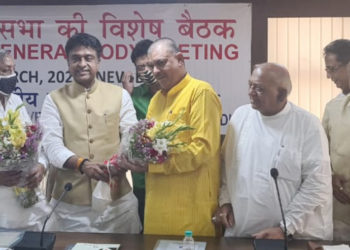
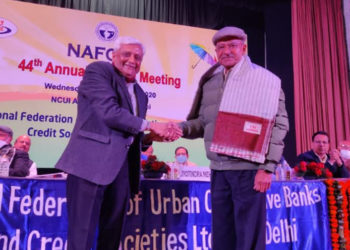
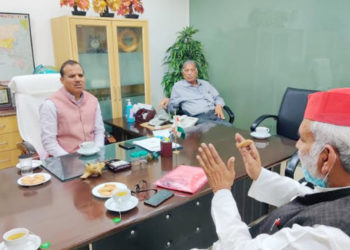
Mudit Verma is a senior cooperative leader from the state of Uttar Pradesh who is heading two cooperative federations including a cooperative bank. He is also Governing Council member of National Cooperative Union of India.

Recently NCUI launched itself into an exercise of eliciting GC Members take on the proposed changes in the bye-laws of NCUI.
Mr Verma has sent some suggestions which are respectful of Multi State Cooperative Societies Act 2002 on one hand and emphatic on preserving the cooperativeness of NCUI on the other.
Mr Verma says elected member of Governing council should cease to be member of GC if he loses his position in his parent society.
On the formations of constituency for the election of GC, he says “Nine members should be elected from the constituency from among the member State Cooperative Union and cooperative Union Territories. These nine members come from across the states. J & K, Punjab and Himachal Pradesh combine together to elect one GC member while states of Maharashtra, Andhra and Goa combine to send another GC member. Similar is the case with other states.
On the election of highest contributors to the Cooperative Education Fund Verma suggests that “delegates should be elected from the 20 highest contributors”.
On the representation of other various cooperative federations at both national and state levels such as Fishcopfed, NFCL, NHEC and others Mr Verma wants to include “ Other State Cooperative Federations and Association which are not included in this list”.
Plus he suggests that one member should be elected from delegates of multi state cooperative societies separately.
Election procedure for the constitution of GC has been a headache for NCUI and drags it to the court every now and then. Dearth of proposer and seconder from the same constituency when it is small leads to constitutional crisis for NCUI often.
Mudit Verma says “member of GC should be elected by and from amongst the delegates of respective constituencies. If there is more than one vacancy, each voter should be entitled to cast votes up to number of vacancies and the contestants securing highest votes should be elected to the extent of the vacancies.
(Indian Cooperative seeks suggestions by other GC members also at info@indiancooperative.com)
Posted on 07 June 2012 by Dipak Kumar
National Cooperative Union of India has asked its members to suggest changes in the bye Laws of NCUI with changing times. Also it is dragged to court every now and then on issues related to bye laws.
Mudit Verma, a Governing Council member has sent some suggestions which are respectful of Multi State Cooperative Societies Act 2002 on one hand and emphatic on preserving the cooperativeness of NCUI on the other.
Mr Verma says Elected member of Governing council should cease to be member of GC if he loses his position in his parent society.
On the formations of constituency for the election of GC, he says “Nine members should be elected from the constituency from among the member State Cooperative Union and cooperative Union Territories. These nine members come from across the states. J & K, Punjab and Himachal Pradesh combine together to elect one GC member while states of Maharashtra, Andhra and Goa combine to send another GC member. Similar is the case with other states.
On the election of highest contributors to the Cooperative Education Fund Verma suggests that “delegates should be elected from the 20 highest contributors”.
On the representation of other various cooperative federations at both national and state levels such as Fishcopfed, NFCL, NHEC and others Mr Verma wants to include “ Other State Cooperative Federations and Association which are not included in this list”.
Plus he suggests that one member should be elected from delegates of multi state cooperative societies separately.
Election procedure for the constitution of GC has been a headache for NCUI and drags it to the court every now and then. Dearth of proposer and seconder from the same constituency when it is small leads to constitutional crisis for NCUI ofter.
Mudit Verma says “member of GC should be elected by and from amongst the delegates of respective constituencies. If there is more than one vacancy, each voter should be entitled to cast votes up to number of vacancies and the contestants securing highest votes should be elected to the extent of the vacancies.
(Indian Cooperative seeks suggestions by other GC members also at info@indiancooperative.com)
Posted on 13 August 2011 by Ajay Jha
The last Governing Council meeting of National Cooperative Union of India proved stormy with host of issues raked up by the members. Readers will recall that this meeting took place in the shadow of NCCT scam which has led to stand off between NCUI and Agricultural Ministry.
According to sources, NCUI has received letter from the Ministry in which Ministry has asked NCUI to curtail the power of Chairman. Members after members reacted strongly to this suggestion dubbing it as interference in the autonomy of cooperative spirit.
Some members indeed reacted otherwise and demanded that letter be placed before the Governing Council before a considered opinion could be given. Talking to Indiancooperative.com, Mudit Verma, one of the Board members said that we have helped Chandra Pal Singh Yadav win election but these things can not be done orally. “Only when the letter is placed would I be able to react properly”, said Mr Verma.
At the start of the meet, Ashok Dabas ,another member of Board, put the matter of curtailment of power of NCUI President. Members were unanimous on the emotive issue except demand of propriety of placing agenda from certain quarters.
Other issues put before the Governing Council related to renting out a part of NCUI complex to state cooperative bank. Shivaji Rao Patil, another member demanded that first the rent pending with other tenant be recovered. Mudit Verma disagreed on the issue of renting out to Cooperative bank as he demanded that DDA norm be followed first.
President Chandra Pal Singh Yadav put the matter of renting out before the Board and requested them to decide on the issue. Board, in return left it out on him to settle the matter.